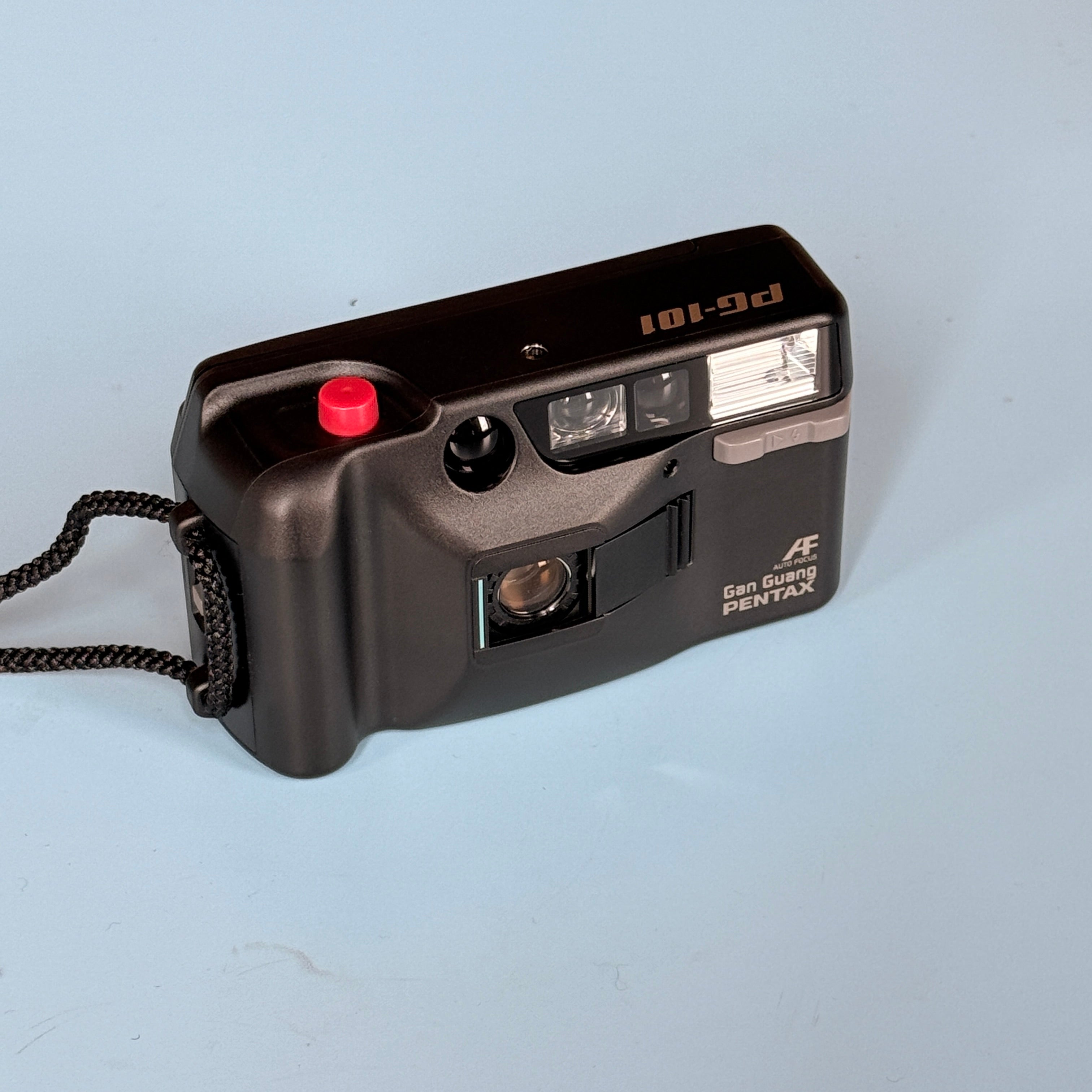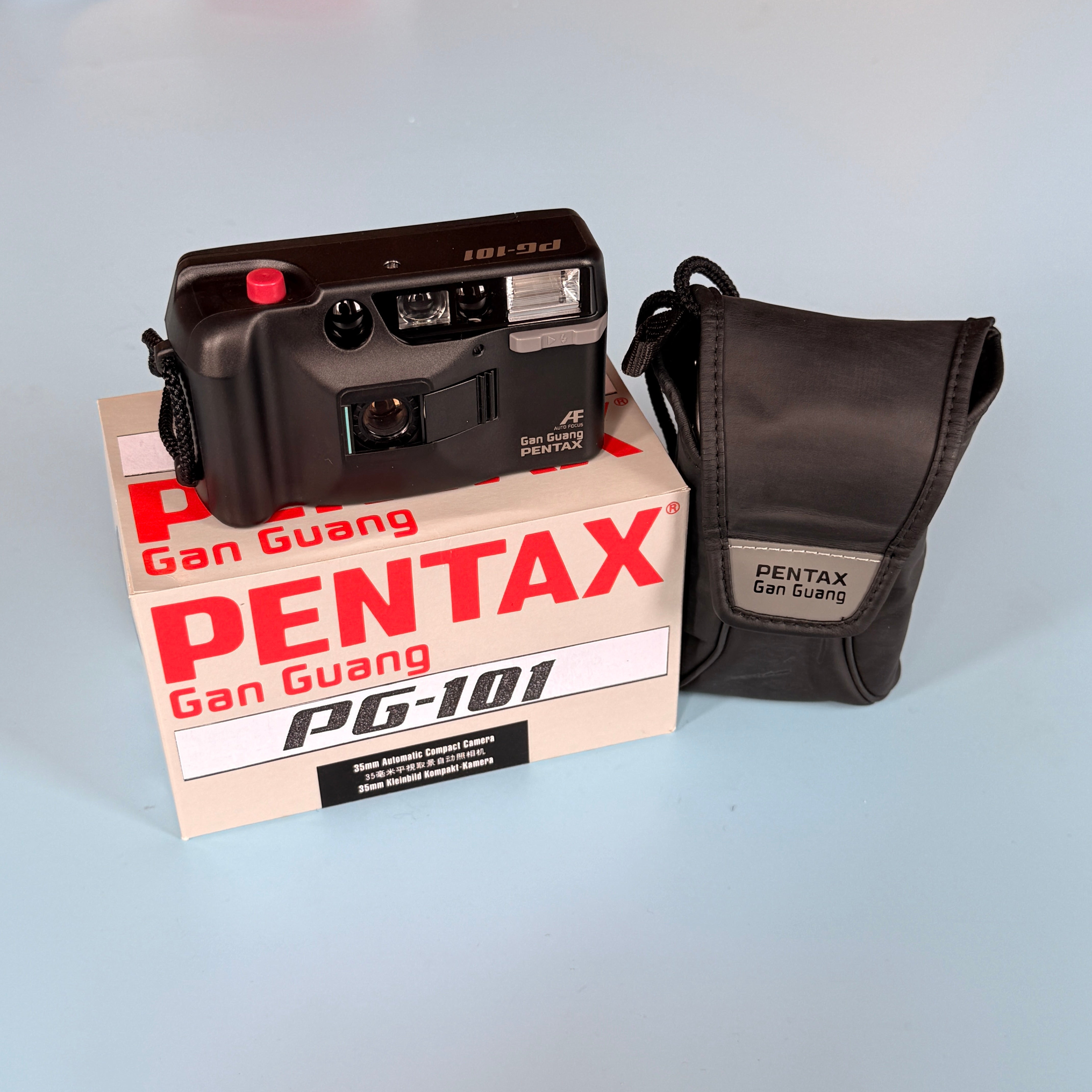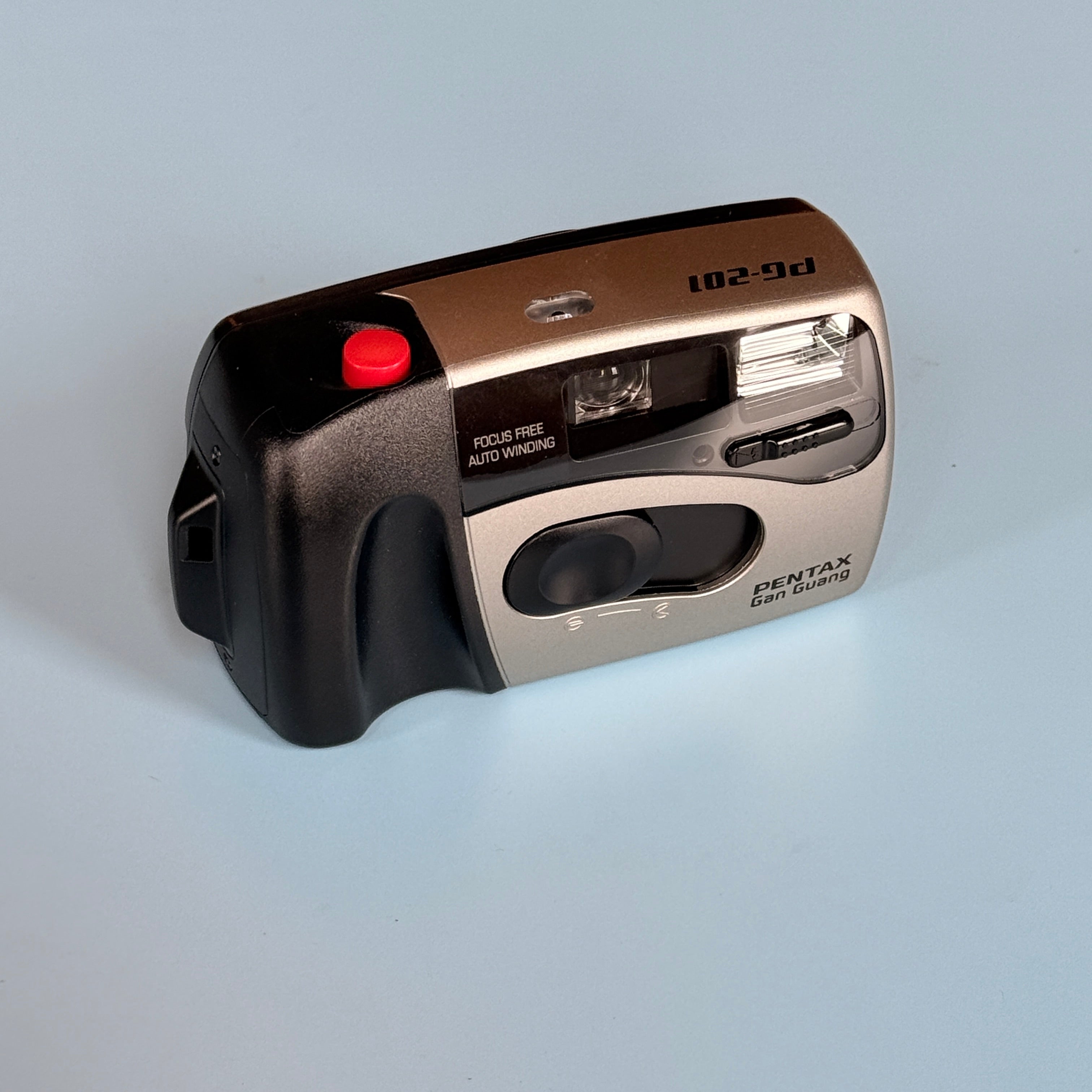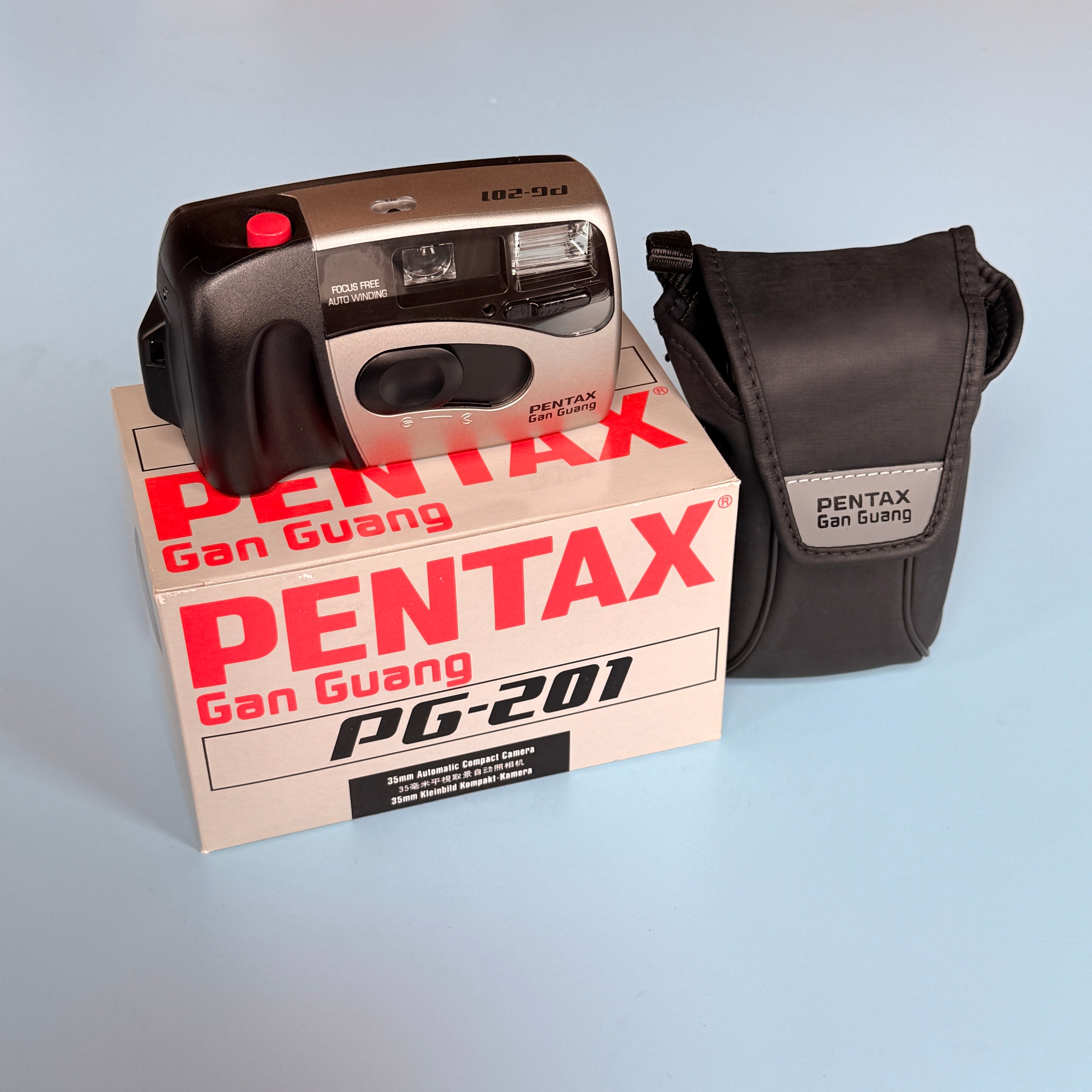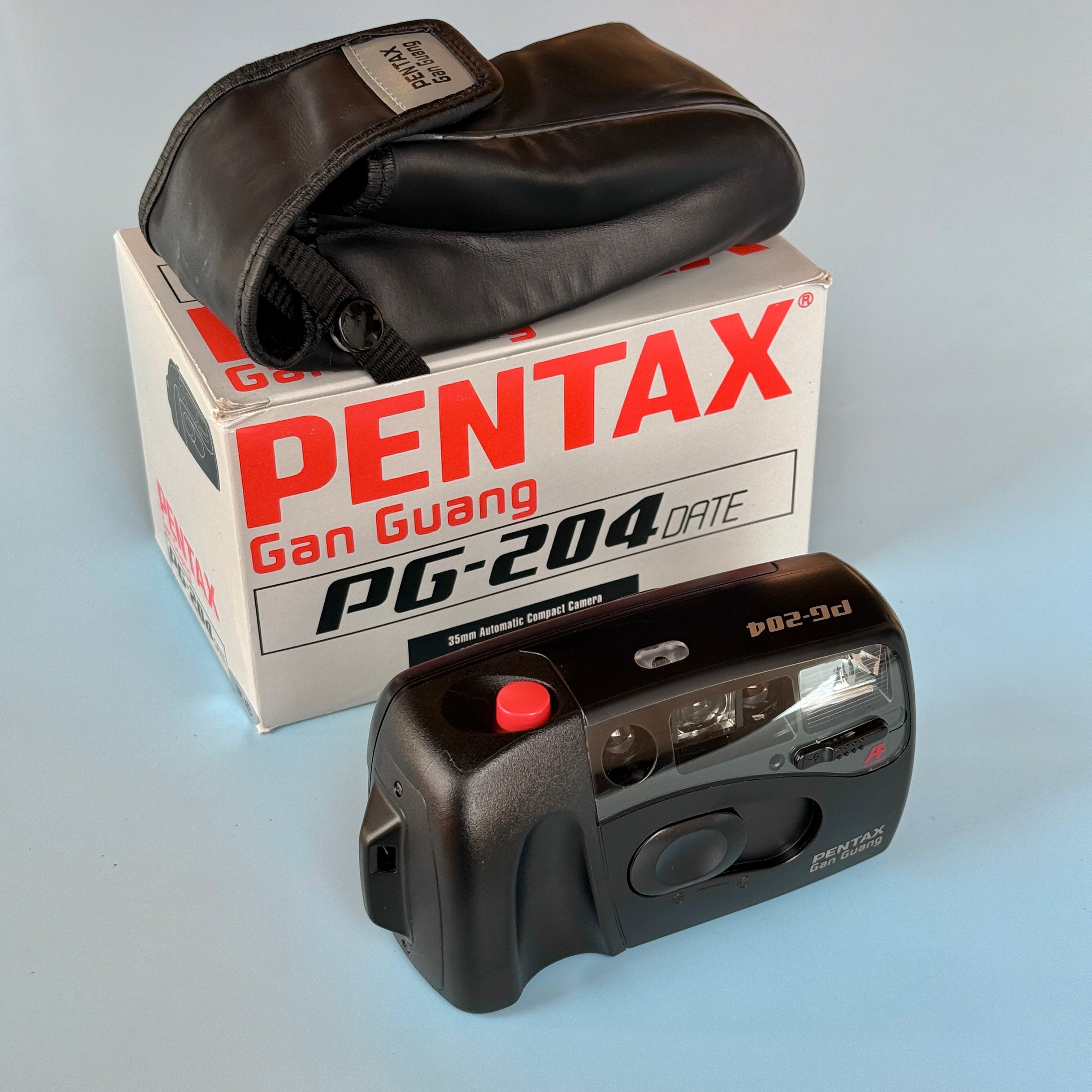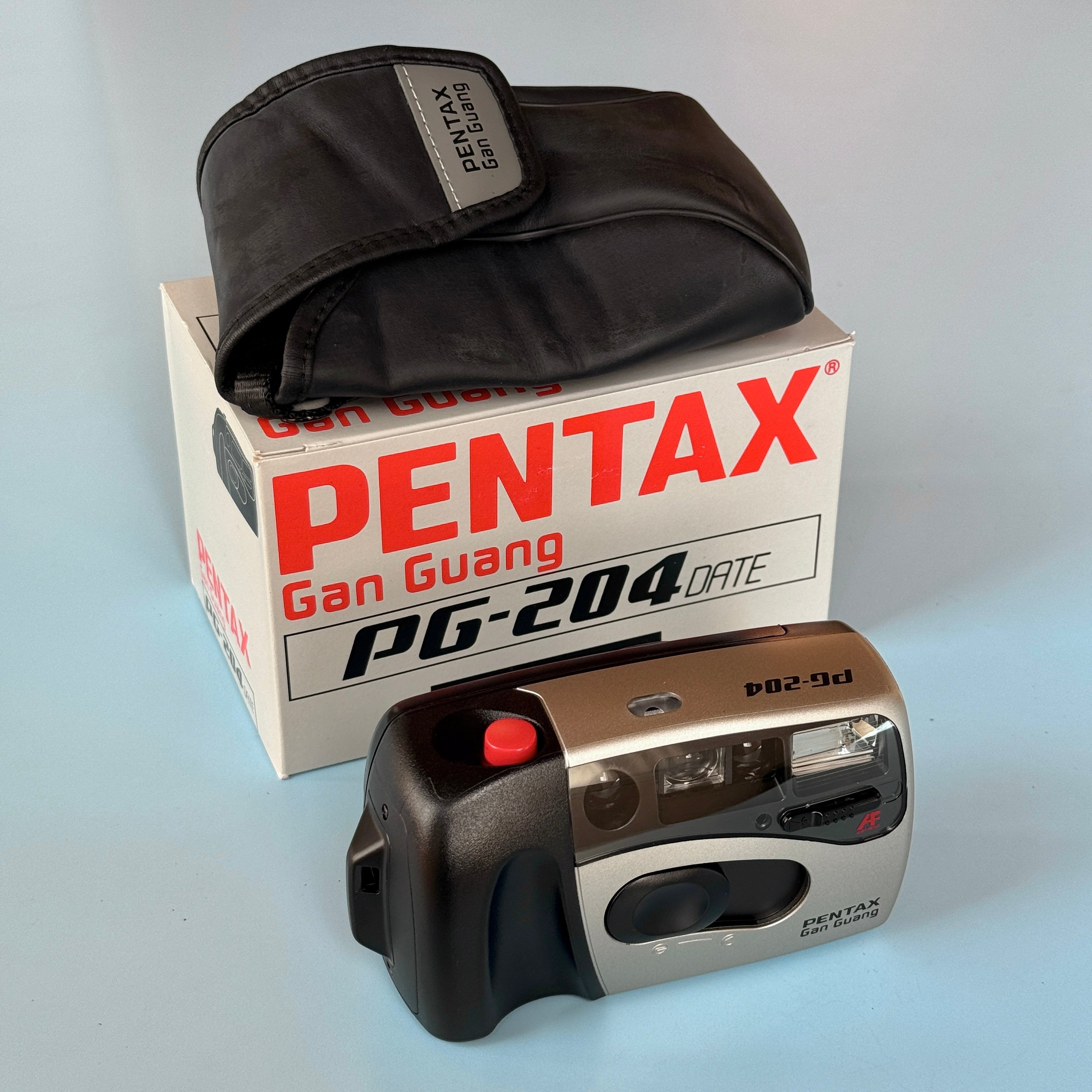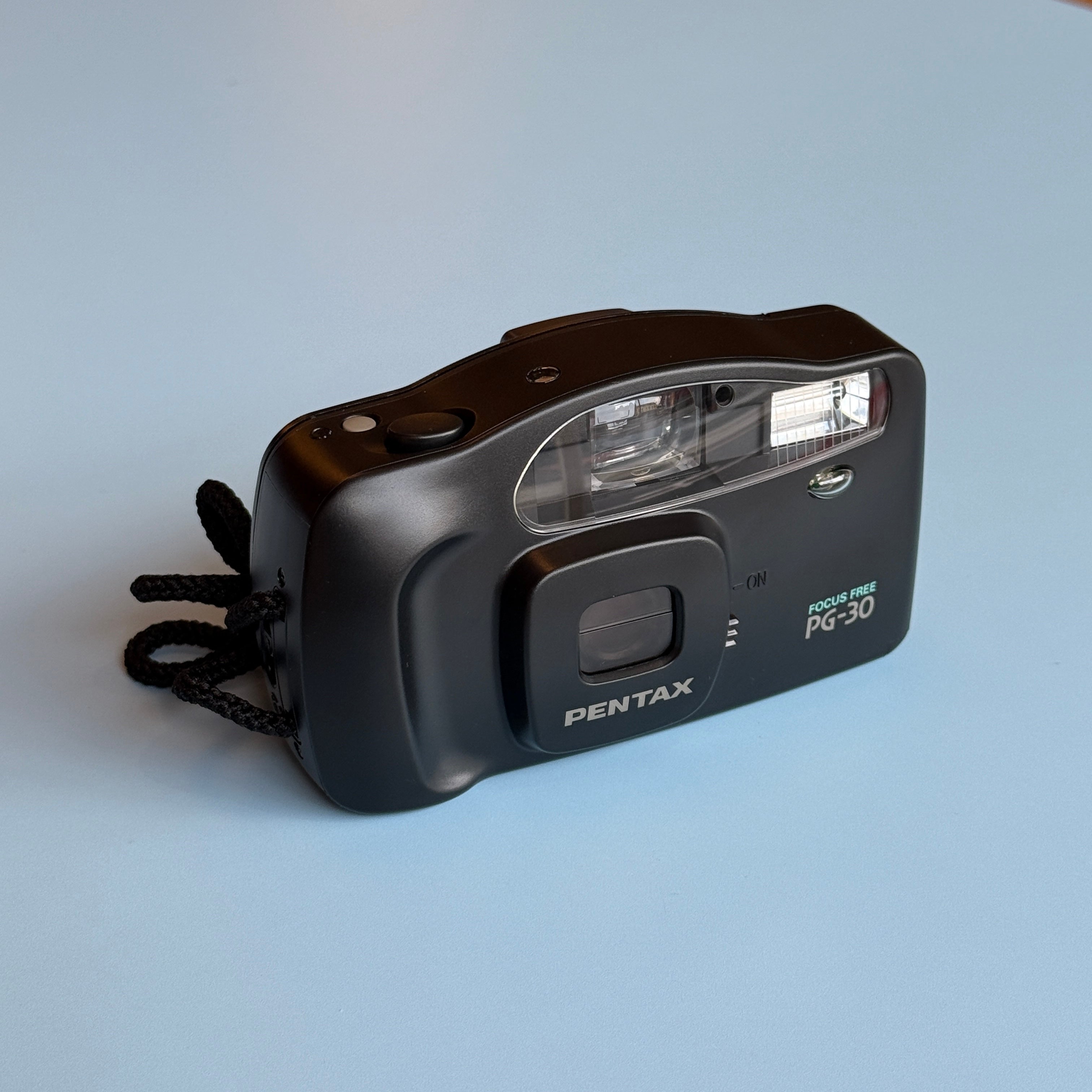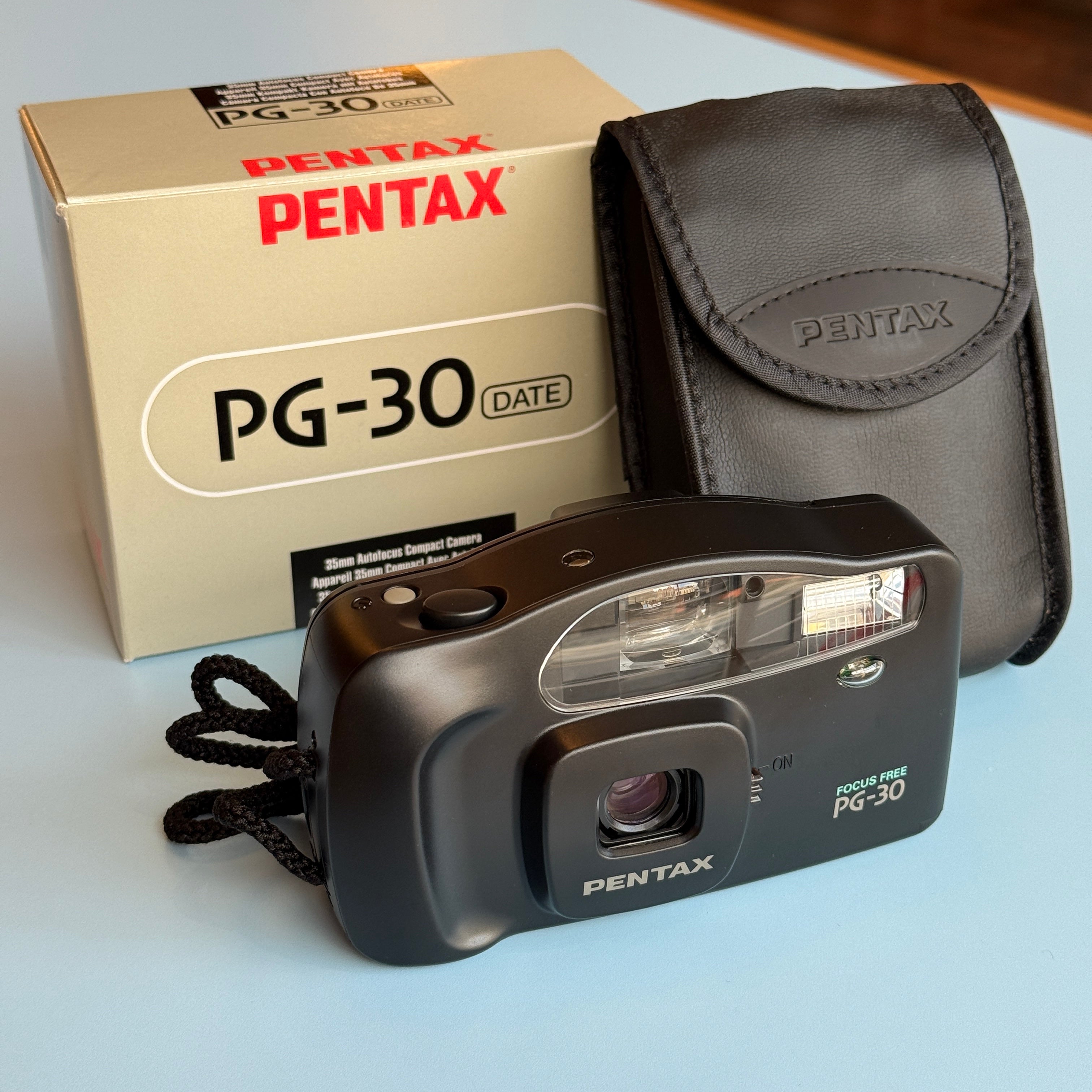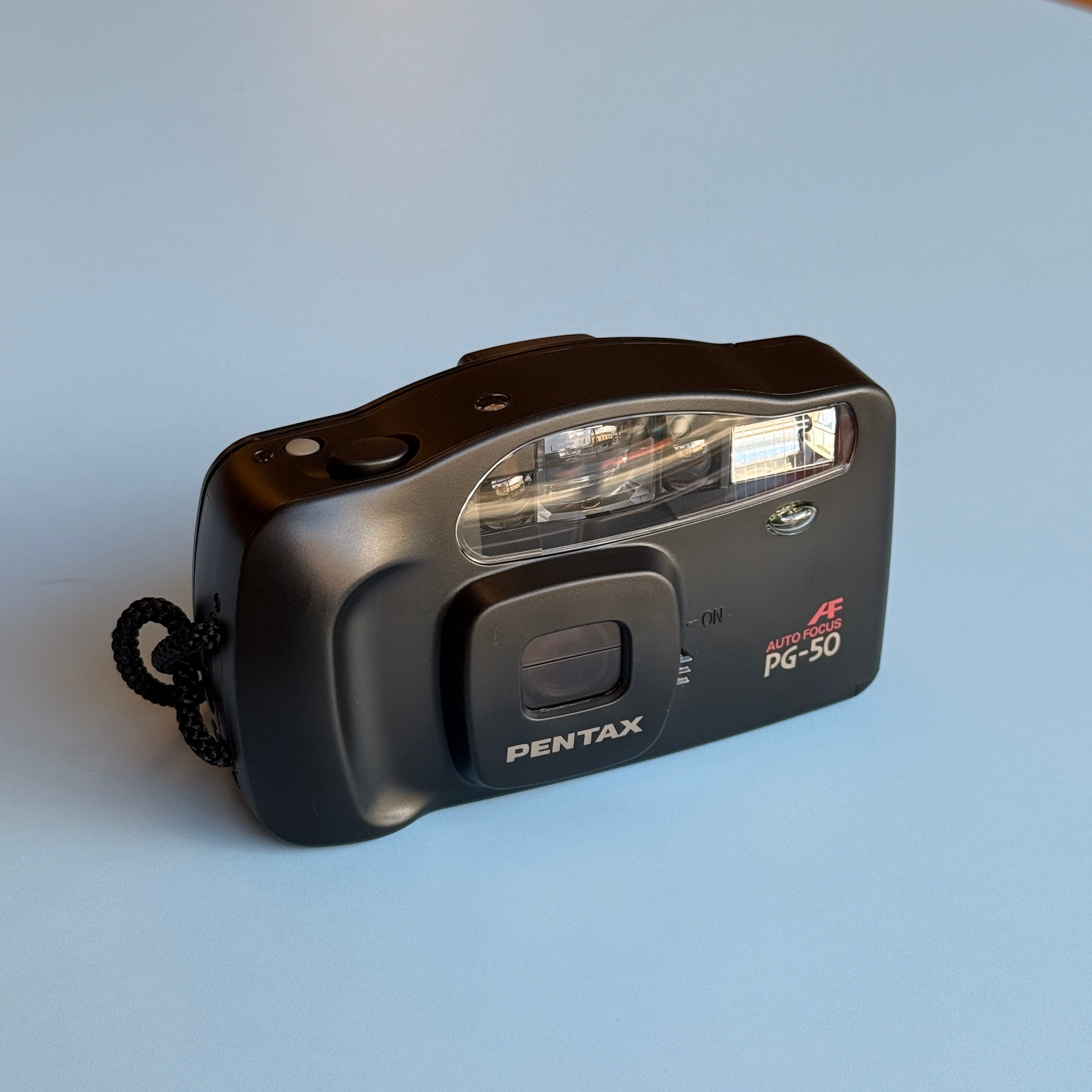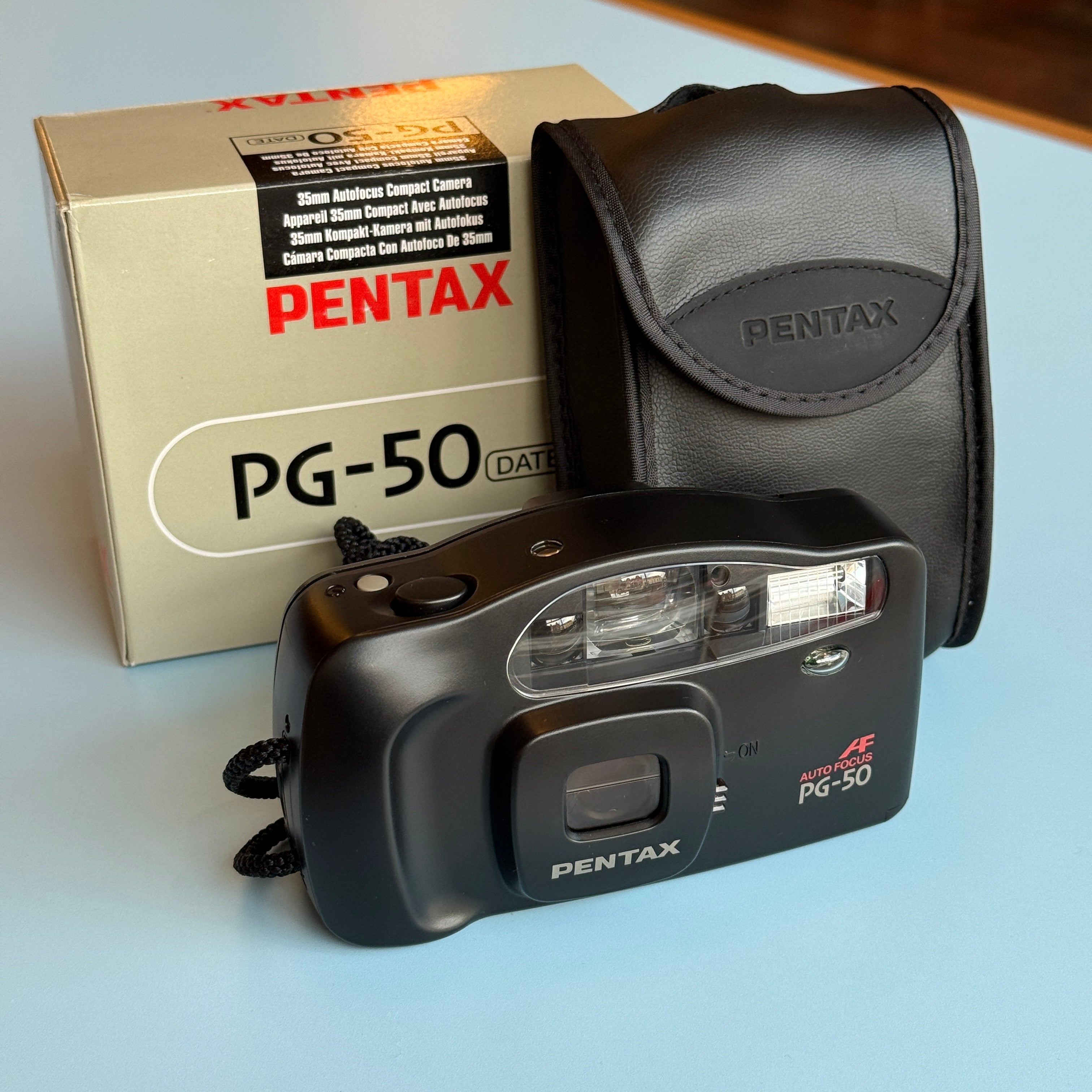


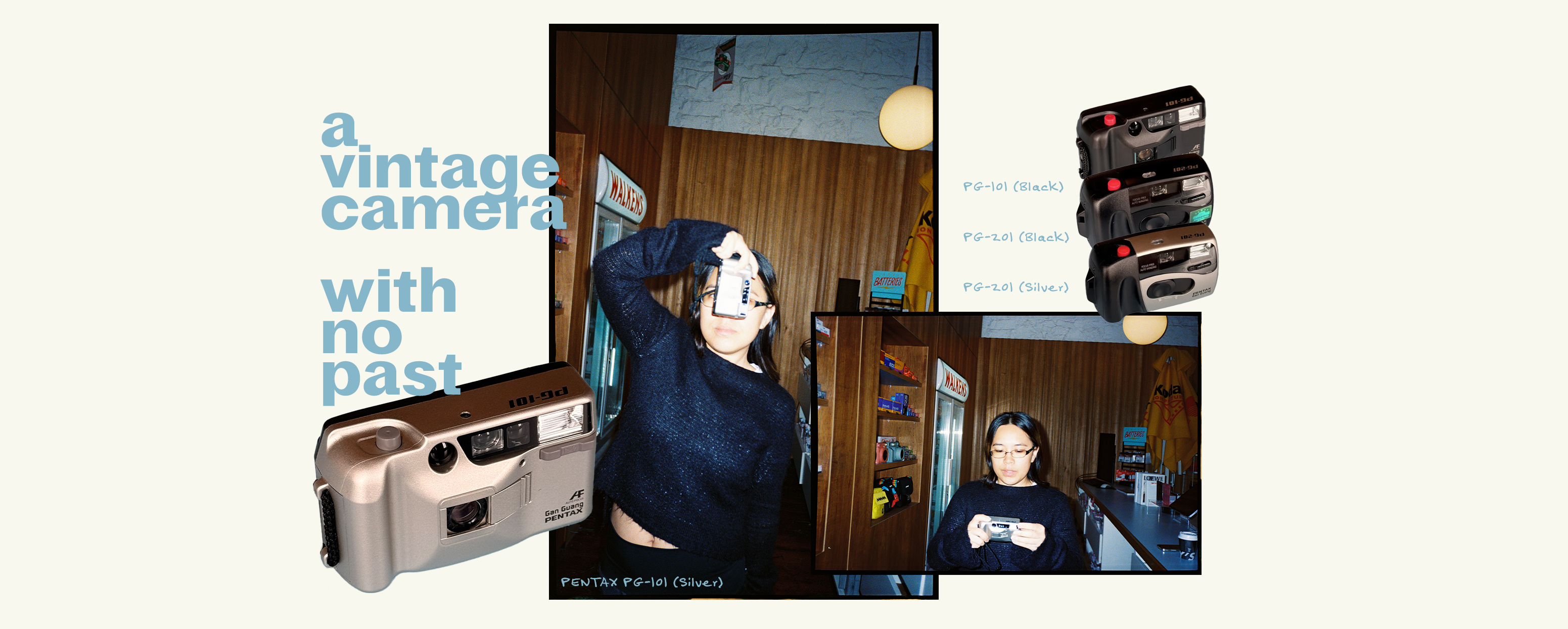


If you’ve ever wanted a film camera that doesn’t ask anything of you, but just delivers sharp, beautiful film photos - then these brand-new vintage Pentax point & shoots are IT!
No drama, no fiddly settings, a little 35mm that only asks you to point & shoot!
These are untouched, deadstock cameras from the 90s, so you don’t have to take the gamble on a second-hand camera off Facebook Marketplace.. let alone beg your housemate to drive you out 5 suburbs away.
What it is
The PG-101 and PG-201 sit in that lovely category of easy-to-use, automatic, everyday cameras:
- Motorised film advance and rewinding
- Built-in flash that you can turn on or off
- Camera pouch & strap included
- Sliding lens cover
- Lightweight body
- Takes 2 x AA batteries
They’re great for every day, anywhere and everywhere. It takes care of focus, exposure and loading — so all you have to do is take the photo! Need I say more?
Nevertheless, I will…
Getting a clean shot – Fixed focus and shutter speed
Honestly, it’s just too easy with this camera. With a fixed 1/125 shutter speed, it’s fast enough to freeze everyday moments, and slow enough to let a decent amount of light onto your negative.
My test roll showed no major motion blur or camera shake, which was surprising in the low-light shots because I’m clumsy.
Most objects/subjects were in focus on the roll. I guess the only limitation on these cameras is close-up or macro shots. They have either fixed or auto focus from 1.2m/1.5m – which just means no shots of a delicious bowls of pasta, unless “blurry” is your thing (sorry foodies).

I believe the PG-101 uses old-school Infrared Auto Focus, and the PG-201 is free focus. I honestly didn’t find a difference in the photo clarity between the two. Both made consistently clear photos.
As long as you’re taking the photo away (enough) from your subject, it’ll be as crisp as a Melbourne winter’s morning.
The lens (and why it matters) – it’s glass!
Cameras like this often get overlooked for more expensive, higher-tech point & shoots, but Pentax has always been quietly solid with their glass lenses.
What you get here is:
- Crisp, clean images when lighting is strong
- Punchy contrast with flash, that you’d expect from ‘90s compacts
- A softer, dreamy feel in lower light (no flash) that look quintessentially “film”
They’re not trying to be fancy, but hold up very well with their “3 elements in 3 groups” glass lens. This is a big step up from disposable cameras, or basic cameras like the Kodak M35 that have 1 plastic lens. It makes for surprisingly sharp photos, and great contrast.
Of course, they’re a step down from more premium point & shoots out there - like a Canon SureShot or Olympus MJU released later in the decade. Those have advanced light balancing and auto-focus tech that consistently make crystal-clear photos.
These Pentax PGs are really just good enough. Great enough even.
The shooting experience

- Light enough to carry everywhere – with a long strap you can wear cross-body
- Fast and simple to shoot with - no need to advance/wind to your next frame
- Lovely analogue tactility – buttons, knobs and whirs
- Easy and fast flash on/off switch
From start to end:
Simple loading with a film guide inside, then you just press the shutter twice to bring the fresh film to your first frame.
The counter is reliable, so you can confidently shoot through your roll.
The rewind switch is on the bottom of the camera and gives a satisfying whir when loading your film back into the canister.

Optional settings - The fabulous flash, aperture/ISO, rewind switch
Unlike the triple-flash, blinding lights you sometimes get from higher-tech point & shoots, the built-in flash on these cameras is surprisingly strong enough to fill a room, but won’t leave your subjects seeing light spots after you take their photo.

| Turning flash on in low light can give that high-contrast film look. | Turning flash off, leaves us with a gentle and moodier shot. |
There is also one other setting you can change on these cameras, which is the ISO at either 100/200 or 400. Usually, you match this with the film speed you’ll find on your film box/canister, and the camera adjusts its default aperture of f/4.5 accordingly, so the light balancing is alright. It determines how much light is let in via the lens itself (not how fast the shutter moves).
For the more versed camera users, it’s fun to be able to adjust this depending on whether you want your frames a bit over or under-exposed.
Like all good point & shoots, there’s a rewind switch located at the base of the camera. This is for when you’re not sure if the film’s automatically wound back at the end of your roll.
But it’s great practice to be familiar with this switch. You’ll never have to guess again or burn the end of your roll, if you just flick the switch before you open the back to submit your roll.
What and who it’s best for:
- Both every day and travel days, where you don’t want to overpack your brain
- Flash photos at night – gigs, festivals, parties
- Anyone new to film who just wants something easy and forgiving
- Anyone well-versed in film who wants a reliable, crisp alternative to their bulky, high-tech cameras that are too precious to take to the pub or the beach
I’ve loved testing this roll in the shop and on a walk to our Lab. Fitzroy is a hectic place to be midday, so it was great to whip this camera out and shoot without hesitation.
You’ll see I stopped by our neighbours’ and can confidently report back that it’s a camera I recommend everyone snap up while stocks last (@Luke at the Fitzroy Bookstore and our friends at Das Automat!)
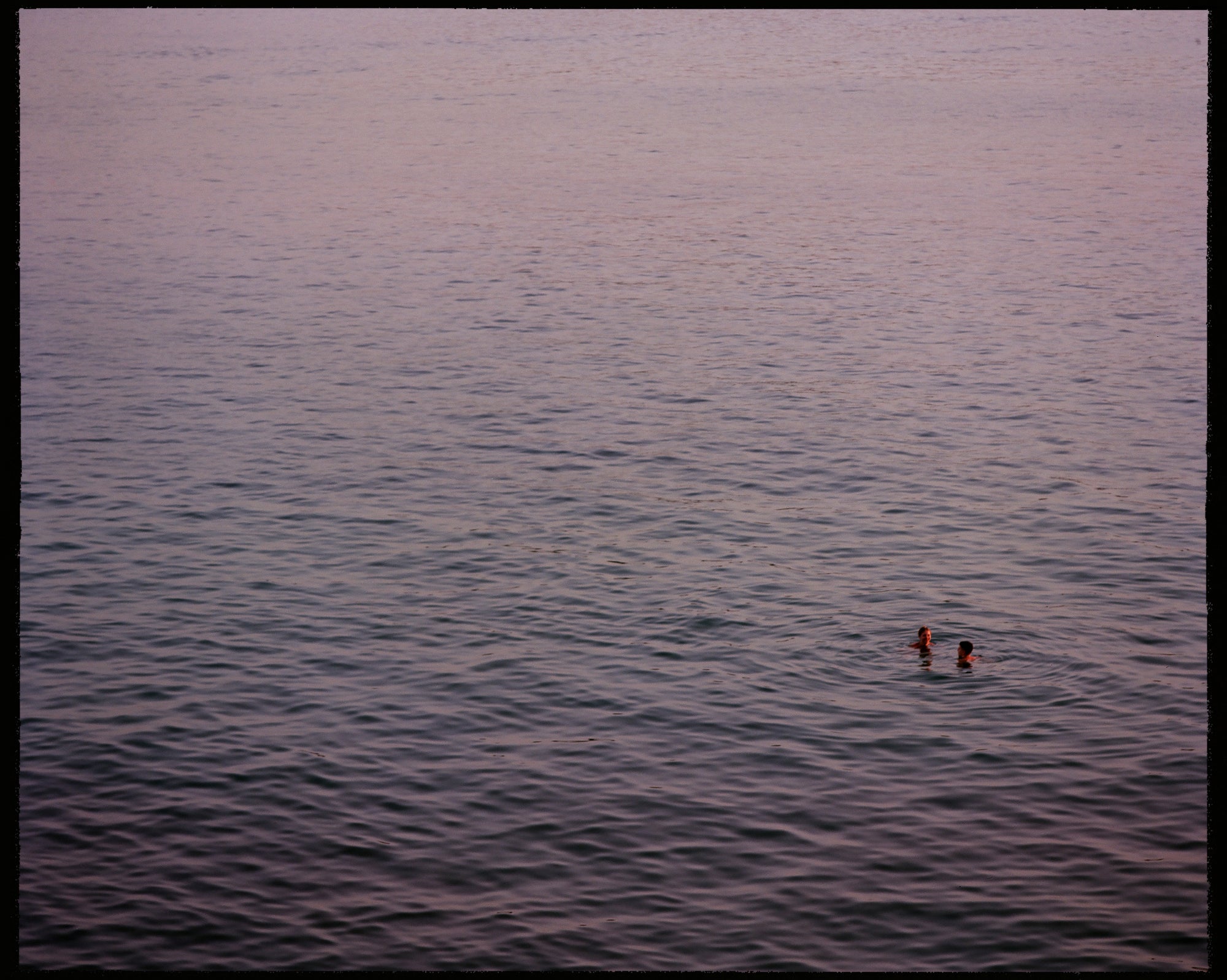
And with that, I leave you with a gallery of photo examples our team and I (@william.analog & @on_a_balcony) have taken on these brand new vintage Pentax PG range of cameras...
Love @_isafilm
<3